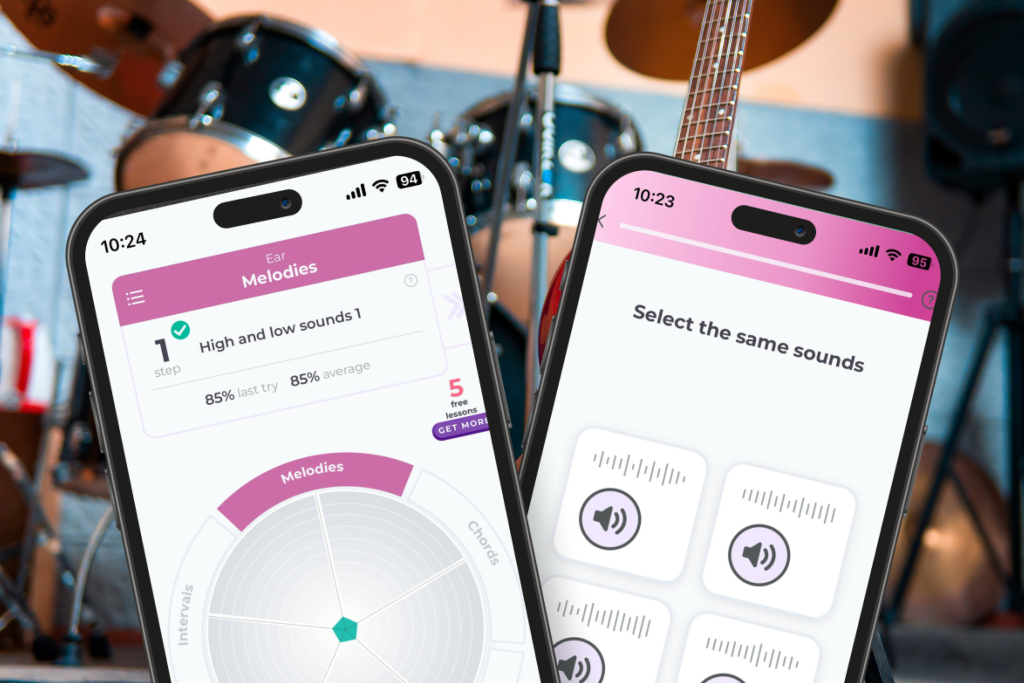
Introduction To The Role Of Digital Tools In Learning Music Theory
In the modern world, where education processes have been saturated with technology, the learning of music theory is no longer the exclusive prerogative of printed editions. New horizons are opened by digital tools to those who wish to be initiated and master the musical foundations. Instead of the traditional, passive form of information perception, they offer a dynamic, interactive, and adaptive learning experience.
It does not replace the classical books of music theory but comes to assist and can facilitate the understanding and memorization of the material, which is the job of our application. Abstract concepts — complicated to perceive either by ear or by eye — now become more accessible and visual. This is where app integration, theory books, the Talented app, complementing resources, and practice synergy come together to drive resource synergy, lesson cohesion, and holistic learning — see details.
Why digital tools are indispensable today
- Instant feedback: Mistakes are logged on the spot, therefore contributing to better learning.
- Individual pace. The student sets their own speed of the material covered; this decreases stress while increasing motivation.
- Multimedia support. Audio and visual elements make abstract theoretical concepts more tangible.
- Accessibility anywhere, anytime. The mobile format enables learning on the go, free from textbooks and classroom lessons.
Limitations Of Traditional Music Theory Textbooks
Despite their fundamental value, classical textbooks possess a number of natural limitations which may hinder modern audiences in fully mastering the material.
| Limitation | Description | Consequences for the Student |
| Content Stasis | Information presented in a fixed form, without interactivity | Difficulty grasping complex concepts; monolithic learning experience |
| Lack of Immediate Feedback | No way to check understanding instantly or correct mistakes right away | Systematic knowledge gaps occur |
| Limited Visualization | Mostly text and notation; few audio/video resources | Difficulty perceiving intervals and rhythmic patterns |
| Unable To Adjust To Level | One-size-fits-all approach, ignoring individual differences | Loss of motivation if material is too hard or too easy |
Thus, traditional books serve as an excellent foundation, but on their own, they often cannot fully unlock the potential of modern music education. While theory is a series of rules and formulas in presentations, digital solutions can add vitality, interactivity, and personalization. A harmonious educational environment can be formed through a combination of classical and new tools in which each student will feel maximally engaged and supported. Because of this, our tool was created: to complement and expand the possibilities of classical music theory through app-book integration, feedback loops, and study aids.
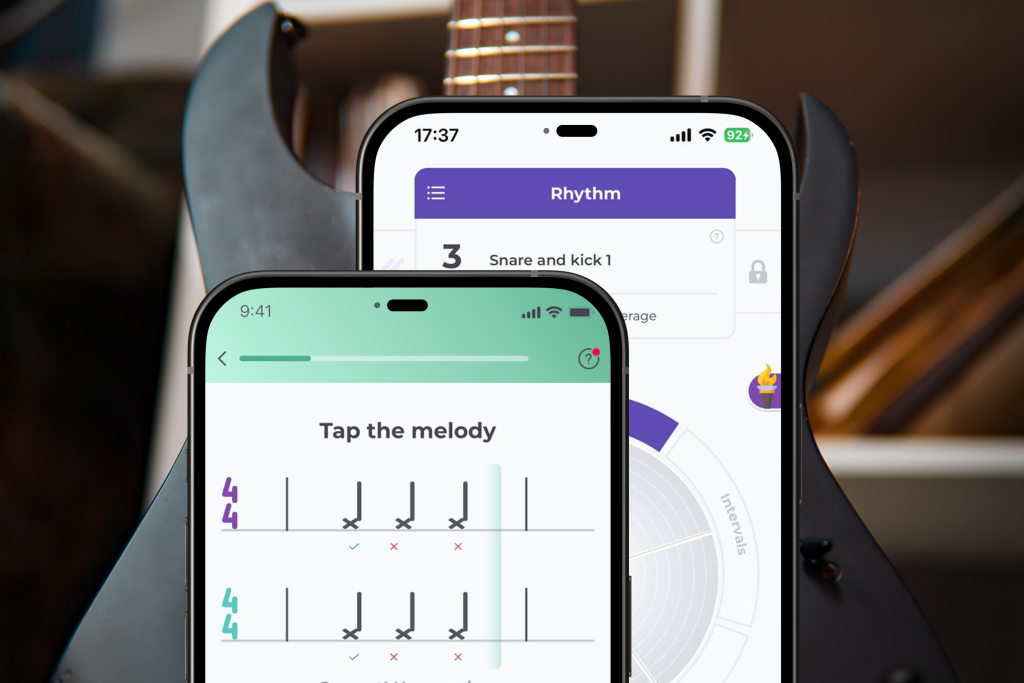
How Talented Complements Classical Teaching Methods
That is the very foundation on which classical music theory textbooks build an understanding of musical laws, harmony, rhythm, and melody. Most of them, though, are still confined by a static presentation of material and lack of interactivity, increasingly perceived as a drawback in today’s educational environment. Talented enters here: not an application developed to replace the classical methods but rather to complement them.
- Flexibility of presentation. The user determines the speed and sequence of the material studied, goes back to sections which were difficult, and skips over content already mastered.
- Instant feedback. Unlike books, which rely on self-discipline for knowledge checking, Talented offers exercises with automatic assessment and hints.
- Visualization of complex concepts. Through dynamic diagrams, animations, and sound examples, abstract theories in music become concrete for better theory application.
- Integration with practical tasks. With the help of the application, theory can be put into practice, for example, playing melodies, recognizing intervals, or composing chords.
This app integration with theory books leverages content alignment and lesson mapping so both complementing resources reinforce practice reinforcement and knowledge building. The Talented app is the bridge that connects theoretical knowledge and its practical assimilation.
Features That Reinforce Knowledge Through Interactive Application
One of the great strengths of Talented is interactivity: due to a wide range of task formats and tools, the user manages not only to read and listen but also to take an active part in the learning process.
These features make learning lively, dynamic, and close to real musicians’ tasks. Such experience demonstrates how complementing resources turn theory into practical skills and support curriculum support with structured paths.
Personalization Of Learning With Talented
An individual approach becomes the key to material retention in the modern educational space. Unlike traditional textbooks, Talented lets you personalize the process of learning music theory to meet exactly your needs and preparation level.
- Adaptive Exercises. The app automatically adjusts task difficulty according to successes or difficulties.
- Flexible Schedule And Learning Pace. Set a personal schedule of sessions, choosing comfortable times and lengths.
- Personalized Recommendations And Progress Analysis. After every exercise, detailed statistics show what to repeat — strengthening lesson cohesion and practice reinforcement.
- Choice Of Directions And Interests. Thematic modules enable deeper dives into chords and harmony, rhythm and meter, and more.
- Integration With External Tools. Export progress and notes, sync across devices, and maintain reading practice and study aids.
This is practice synergy in action: lesson customization, feedback loops, and app-book integration focused on your goals. Here the Talented app evolves from tool to reliable assistant.
Examples Of Successful Integration Of Talented Into The Educational Process
There are several vivid examples where digital tools organically fit into traditional education in music theory and improved and diversified this process. Combining classics and innovations really works, and here’s why:
- In a music school, teachers introduced the app during harmony lessons. The textbook remained the foundation, while real-time practical exercises ran in the app. Results: motivation increased, explanations took less time due to visualization, and automatic checking revealed and corrected gaps.
- An individual-lesson workflow paired chapters from a book with app mini-tests and visualizations between lessons — accelerating mastery of topics by 30–40% compared to the previous approach.
- Online courses for beginners intertwined theory with anytime interactivity. The digital module supported systematization and preparation for practical sessions.
Positive effects of integration
- More exposure and practice of material in a convenient format.
- Individual adaptation — the app adjusts to the student’s level and style.
- Immediate feedback and correction of mistakes on the spot.
- Greater engagement and interest due to interactivity and content alignment.
This app integration with theory books exemplifies complementing resources, lesson mapping, and resource synergy in a holistic learning flow.
Conclusion Using Apps And Books Together For Effective Music Theory Learning
Harmony is important in modern music education — not only in melodies, but also in approaches to studying theory. With time-tested printed editions combined with innovative digital tools like the Talented app, wide opportunities open up for students and teachers.
- Variety of material presentation forms. Text, illustrations, and interactive tasks engage multiple perspectives. Classic books give the foundation, while Talented provides lively, practical application.
- Flexibility and adaptation to individual pace. Study theory sequentially in the book and reinforce instantly in the app; Talented tailors exercises to needs — unmatched by books alone.
- Detailed feedback. Books can’t offer instant assessment; Talented returns detailed analysis to speed up error correction and consolidation.
- Motivation through gamification. Game elements maintain interest; books remain the core of textbook support and theoretical grounding.
- Continuity and availability. Books suit deep study in quiet settings; the app is always with you — during breaks, commutes, or rehearsals.
Complementing resources, practice synergy, and scalable app integration ensure theory application, curriculum support, and knowledge building. Together, neither format replaces the other; their synergy delivers a comfortable, effective, and engaging path to true musical skill.